
An annual report tells the story of an organization’s year. It brings together financial performance, major achievements, challenges, and future priorities in one publication. But knowing what to include isn’t always straightforward.
Some organizations produce detailed reports covering financial statements and corporate governance. Others focus on community impact, program outcomes, and donor contributions.
Although the content varies, a well-structured annual report should answer three fundamental questions: What did the organization accomplish? How did it perform? Where is it heading?
So what should an annual report include? Understanding the essential sections of an annual report helps you organize information logically and create a publication that’s both informative and easy to navigate.
What Is the Purpose of an Annual Report?
An annual report gives readers a clear picture of how an organization performed throughout the year. It brings together financial results, major achievements, challenges, and future plans in one place.
Businesses use annual reports to share their performance and progress with investors, shareholders, and partners. Nonprofits, on the other hand, focus more on how they used donations, what their programs achieved, and the difference they made.
Ultimately, an annual report helps organizations stay transparent, build trust, and keep stakeholders informed about their progress.
1. Annual Report Cover and Table of Contents
The cover is the first thing readers notice, so it should give a strong introduction to the report. It usually features the organization’s name, reporting year, and title, along with photography, illustrations, or other visual elements that reflect its identity.
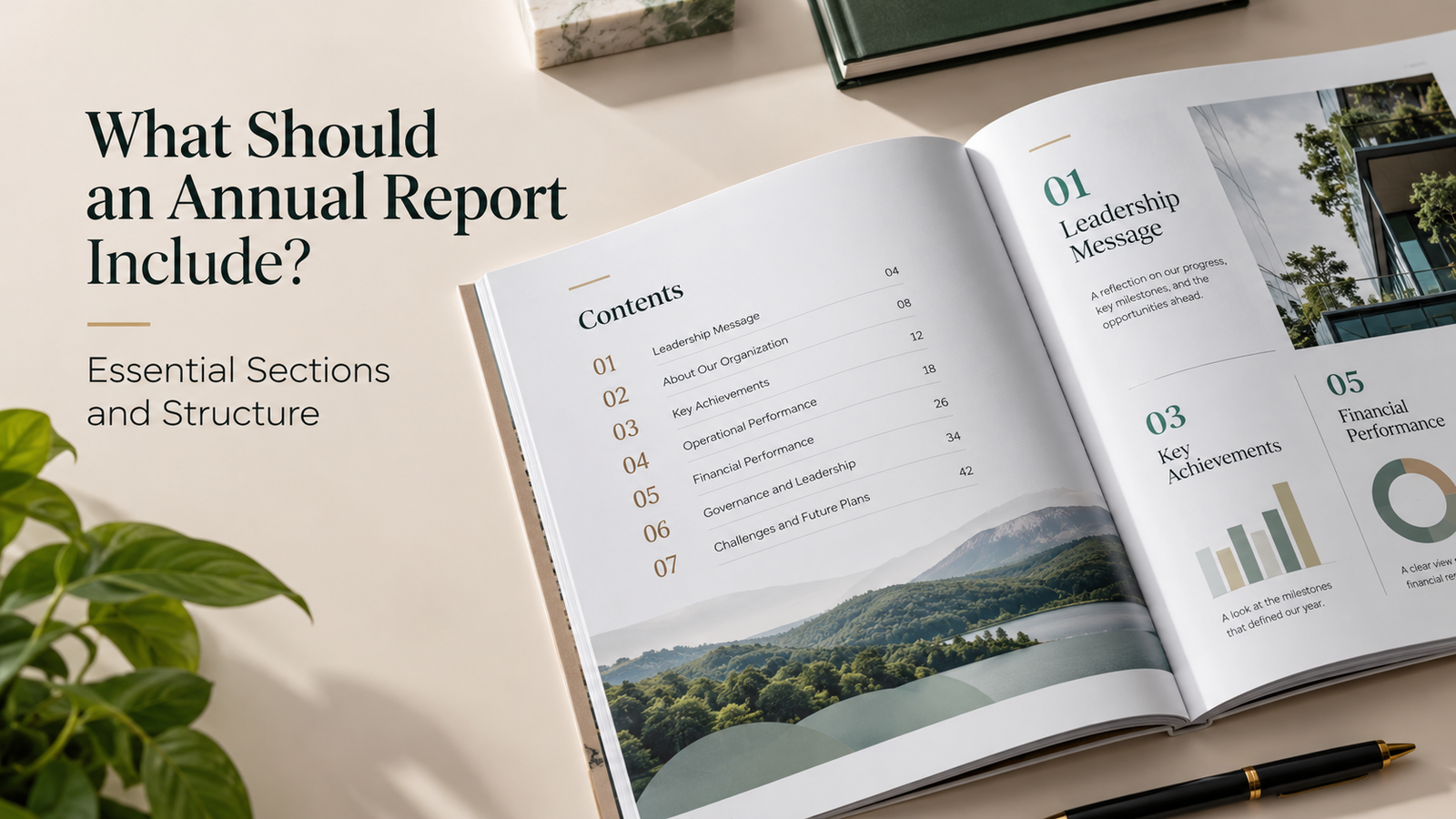
Next comes the table of contents, which helps readers find specific information without searching through the entire document. This is especially useful for longer reports with multiple sections, financial statements, and detailed performance reviews.
2. Leadership Message
A leadership message gives readers a personal perspective on the organization’s performance over the year. Typically written by the CEO, chairperson, or executive director, it reflects on major achievements, important decisions, and challenges the organization faced.
Rather than repeating financial figures or information covered elsewhere, this section should explain what those developments mean for the organization. It may also acknowledge employees, partners, donors, or other contributors. A well-written message sets the tone for the report and provides useful context for the sections that follow.
3. Organization Overview
Not everyone reading an annual report will be familiar with the organization. This briefly introduces its background, purpose, and main activities, helping readers understand what it does and who it serves.
A business might highlight its products, services, operating locations, and key markets, while a nonprofit may focus on its mission, programs, and communities.
The information should be relevant and concise, giving readers enough context to understand the organization’s work without turning the section into a lengthy company profile.
4. Key Achievements and Yearly Highlights
One of the most useful parts of an annual report is a summary of what the organization accomplished during the year. It allows readers to understand the most important developments before moving into detailed performance information.
These highlights might include business growth, completed projects, new partnerships, successful initiatives, or meaningful community outcomes.
Important statistics can be supported by charts, timelines, photographs, or infographics to make the information easier to absorb. The focus of this section should remain on genuine accomplishments that demonstrate progress rather than simply listing activities.
5. Financial Performance and Statements
Financial information helps stakeholders understand the organization’s financial position and how its resources were managed throughout the year. Depending on the type of organization, this section may cover revenue, expenses, profitability, assets, liabilities, cash flow, and other important financial indicators.
Corporate annual reports commonly include an income statement, balance sheet, cash flow statement, statement of changes in equity, and supporting notes. Nonprofits may present financial statements alongside details about funding sources, donations, and program expenses. The exact requirements depend on applicable reporting standards and regulations.
Because financial information can be complex, clear tables, consistent formatting, and carefully organized figures are essential. A thoughtful layout makes the information easier to review without compromising accuracy.
6. Operational Performance and Impact
Financial statements explain how an organization performed financially, but they don’t always show the full picture. The operational performance section provides a closer look at the work completed, progress made, and results achieved during the reporting period.
Businesses may discuss major projects, operational improvements, market expansion, or employee development. Nonprofits can highlight program outcomes, community initiatives, and the number of people supported through their activities.
Including relevant statistics, photographs, and short case studies can make these achievements more meaningful. What matters most is showing the connection between the organization’s activities and the results they produced.
7. Governance and Leadership Information
Stakeholders often want to understand who leads an organization and how important decisions are made. The governance section provides this information by outlining the leadership structure, responsibilities, and oversight practices.
Corporate reports may include details about board members, executive management, board committees, risk management, and compliance. Nonprofit organizations might introduce their board of trustees and explain how they maintain accountability in their operations.
Since governance information can involve detailed explanations, organizing it with clear headings, structured tables, and consistent layouts helps readers understand the organization’s management and decision-making processes.
8. Challenges, Future Plans, and Strategic Priorities
An annual report should present a balanced view of the year, including the difficulties an organization experienced. Discussing challenges openly helps readers understand the circumstances behind certain decisions and performance results.
These challenges might involve changing market conditions, operational limitations, financial pressures, or unexpected developments. Explaining how the organization responded provides valuable context without making the report overly negative.
Looking ahead, this section can also introduce upcoming projects, strategic goals, and areas of improvement. It gives stakeholders a better understanding of the organization’s direction and what it hopes to achieve in the coming years.
How Should an Annual Report Be Structured?
An effective annual report follows a logical order that helps readers move naturally from general information to more detailed content. It typically begins with a cover, table of contents, and leadership message, followed by an organizational overview and the year’s major achievements.
Operational performance, financial statements, and governance information usually appear in the following sections. The report may conclude with future priorities, additional disclosures, or supporting information.
There isn’t one structure that works for every organization. But the order should reflect the report’s purpose, its audience, and information readers most likely need. A well-planned annual report design brings these elements together through consistent typography, clear section divisions, and layouts that make even lengthy documents easier to follow.
Final Thoughts
An annual report is most useful when it presents the right information in a clear, organized way. From leadership messages and financial statements to yearly achievements and future plans, every section has a role in helping stakeholders understand the organization’s performance.
The content may differ between businesses and nonprofits, but the goal remains the same: to communicate progress, maintain transparency, and provide readers with information they can trust.
Once the content and structure are finalized, professional design helps bring everything together. At Graphilence, we provide annual report design services for businesses, nonprofits, and organizations, creating well-structured publications that are easy to read and ready for print or digital distribution.
